
Riding Bhutan
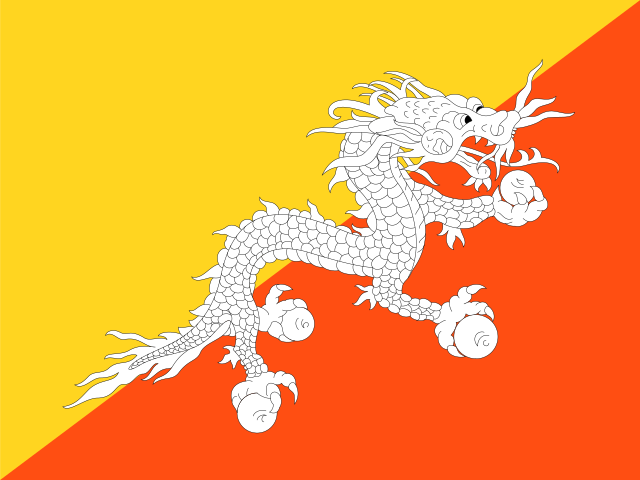
Bhutan essentials
- Languages
- Dzongkha; English widely spoken
- Currency
- Bhutanese ngultrum (BTN); pegged to the Indian rupee, which is also accepted1 USD ≈ 93.0 BTN on 24 Nov 2026
- Time zone
- UTC+6
- Plugs and power
- 230 V, 50 Hz
Type D Type C Type F Type G Type M - Tipping
- Restaurants
- Not expected; most meals are part of the tour
- Hotels
- Not expected
- Tours and guides
- Customary at the end of the trip, often around US$10–15 a day for the guide and US$8–10 for the driver, per group
Most riders fly into Paro, cross Dochu La to Punakha, and carry on along the Lateral Road over Pele La to Trongsa and Bumthang. Bhutan is high passes, valley fortresses and short, slow days, always ridden with a licensed guide and a nightly fee to the government. The quiet alternative is Haa, over the 3,988 m Chele La from Paro.
Ride Concierge
Your ride in Bhutan, arranged.
Tell us what you want. We find the bike or tour, write to the operator and come back with a confirmed booking.
- You describe the rideBike, dates, budget. A sentence is enough.
- We ask the operatorAnd bring their quote back to you.
- You approve, we confirmYou pay the operator directly.
Free to ask. Our 5% fee is due only after a confirmed booking.
See how it works- When to ride
- October to November and March to May; monsoon from late June to September
- Traffic
- Drives on the left; there are no traffic lights
- Guide
- Compulsory for visitors at all times; no self-drive hire
- Entry
- Visa in advance for most (a permit for Indians), plus a nightly SDF
- Day rate
- $265
- In the catalog
- 31 bikes and tours, 15 operators
Where to ride
Each letter matches the map.

Illustration Paro, Thimphu and Dochu La to Punakha
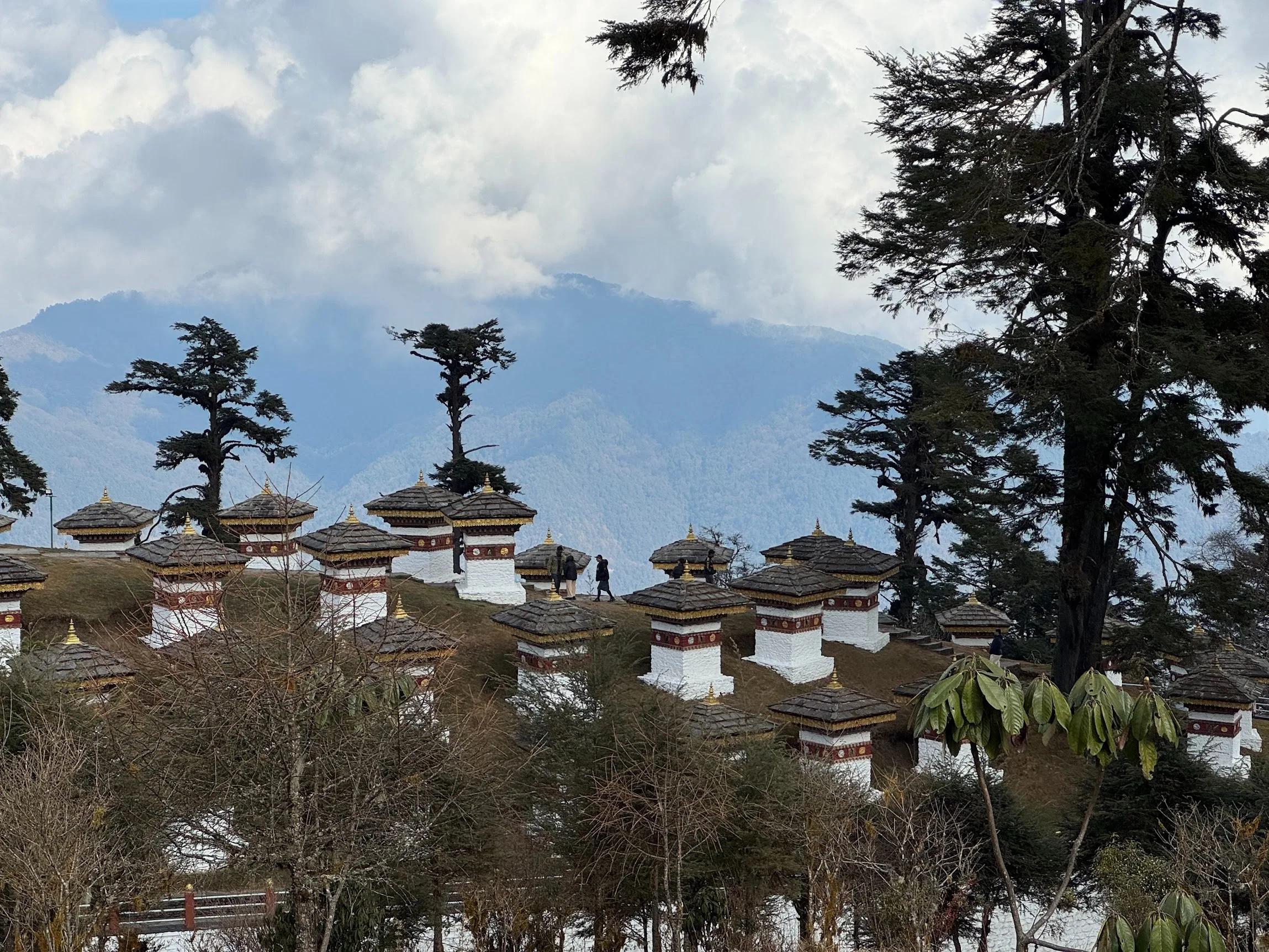
The ride nearly every trip starts with. From Paro it is about 50 km along the Paro and Wang Chhu valleys to Thimphu, the capital. East of Thimphu the road climbs 23 km to Dochu La at 3,100 m, with 108 chortens on the pass and, from October to February, a view of the high Himalaya. It then drops about 49 km to Punakha, where the dzong stands at 1,200 m between two rivers, and on to Wangdue Phodrang. The road is paved and winding, with steep stretches either side of the pass.

Illustration Chele La and the Haa valley
The short loop from Paro. The road climbs about 40 km to Chele La at 3,988 m, then drops 26 km into the Haa valley, which only opened to foreign visitors in 2002. Back out, the road follows the Haa Chhu down to Chhuzom on the Thimphu to Phuntsholing road and returns up the valley to Paro, about 77 km from Haa to Chhuzom and 27 km more to Paro. The road over the pass is paved but narrow and steep, with sharp turns and sheer drops; in winter it can carry snow and ice.
Start from Paro

Illustration Central Bhutan: Pele La, Trongsa and Bumthang
The Lateral Road east from Wangdue Phodrang. It climbs to Pele La at 3,420 m, the divide between western and central Bhutan, where a side road drops about 14 km to the Phobjikha valley and its black-necked cranes, which arrive in late October. East of the pass the road runs about 64 km to Trongsa, whose dzong sits on a spur above the Mangde river gorge, then about 68 km over the hills to Jakar in Bumthang. Landslides are common and high passes can close with snow in winter.

Illustration Phuntsholing to Thimphu
The way in by land from India. The road leaves the plains at Phuntsholing, passes the Rinchending checkpost and climbs through the forested hills of Chukha district to Gedu, about 42 km on. It carries on north to Chhuzom, where the roads to Paro, Thimphu and Haa meet, and on up the Wang Chhu to Thimphu. Most of Bhutan's freight moves by heavy truck, so expect them on this road. Buses take about five hours.
Start from Phuntsholing

Illustration East over Thrumshing La to Samdrup Jongkhar
The long ride across the country, for trips that enter or leave by the eastern border. From Jakar the road runs through Ura and climbs to Thrumshing La at nearly 3,800 m, then drops to about 650 m in a matter of hours, from alpine forest into warm valleys, on its way to Mongar. From Mongar it is about 90 km to Trashigang, and from there about 180 km south to Samdrup Jongkhar on the Indian border. Thrumshing La often closes with snow in winter.
Regions of Bhutan
Where riders base themselves

Paro
Where almost every motorcycle trip starts: the international airport, the Chele La road to Haa, and Thimphu 50 km away.
21 tours
Thimphu
The capital, 50 km from Paro, and the start of the road east over Dochu La to Punakha and central Bhutan.
2 bikes

Phuntsholing
The border town for riders coming in by land from India, at the foot of the 145 km road up to Thimphu.
1 tour
Tours in Bhutan
Prices are what each operator publishes, per rider.
| Picture | Tour | Days | Starts | Operator | Price |
|---|---|---|---|---|---|
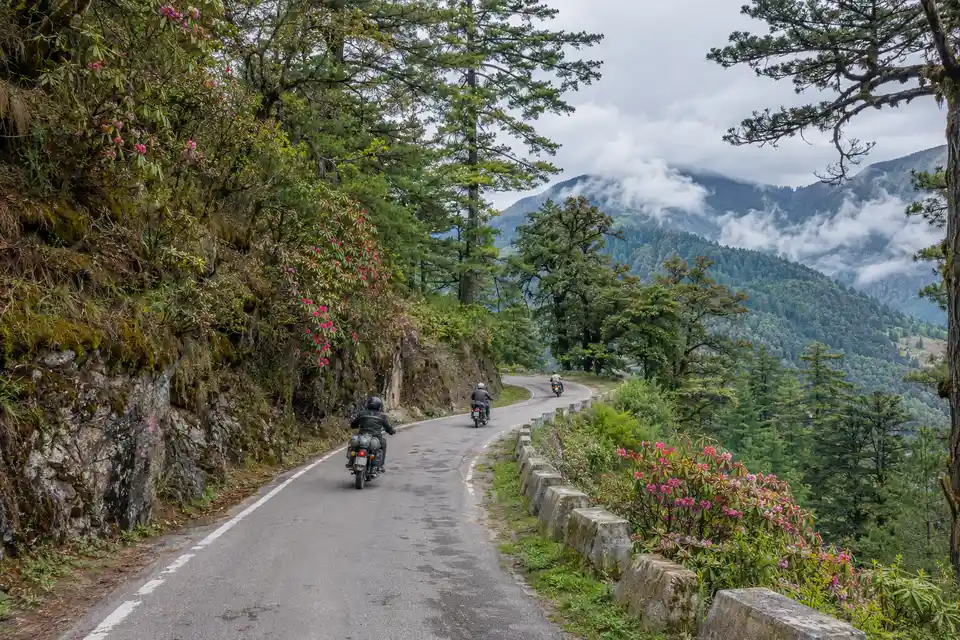 | Bhutan – The Land of the Dragon People | 15 | bhutan-location-unconfirmed | Extreme Bike Tours | $6,300 |
 | Thunder Dragon of Bhutan | 13 | Paro | World On Wheels | $7,675 |
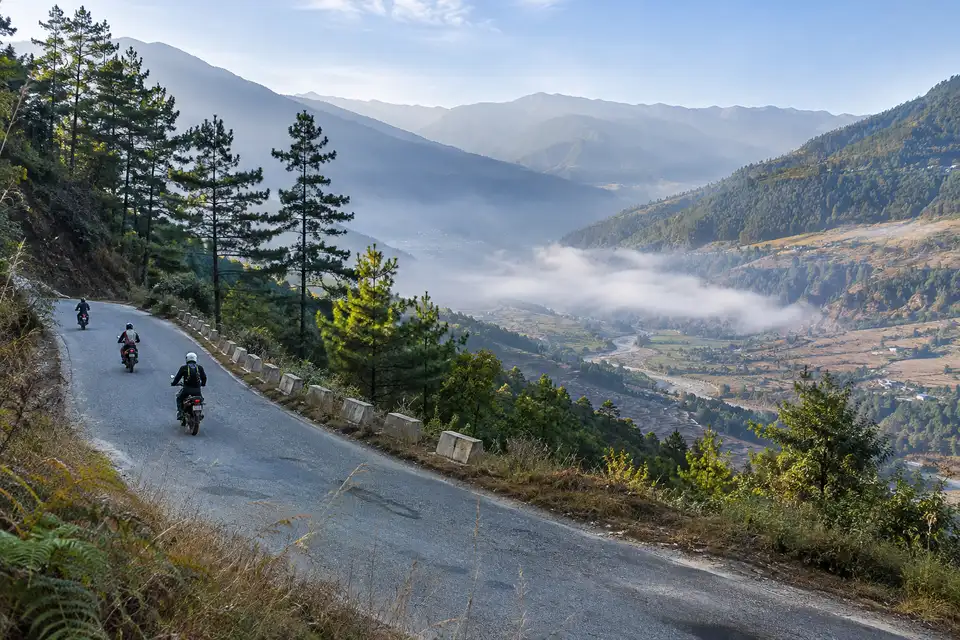 | 12 DAY TOUR (Bhutan – Happiness is a place) | 12 | Paro | Big Bike Tours | $5,400 |
 | East & South Bhutan Loop | 12 | bhutan-location-unconfirmed | Firefox Tours | $2,960 |
 | Royal Enfield Motorcycle Tour | 12 | Paro | Bhutan Rides | $5,450 |
 | The Dragon Kingdom | 12 | bhutan-location-unconfirmed | Vintage Rides | $6,390 |
Companies
Every operator here runs its own bikes or its own tours. We list what each operator publishes; we don’t rank them.
- Ace the HimalayaParo. 1 tour.
- Amigo Treks & ExpeditionParo. 1 tour.
- Bhutan RidesParo. 2 tours.
- Bhutan TUSK Motorcycle ToursParo. 5 tours.
- Big Bike ToursParo. 1 tour.
- BookMyTourPhuntsholing. 1 tour.
- DeyorPhuntsholing. 1 tour.
- Extreme Bike ToursParo. 1 tour.
- Firefox ToursThimphu. 2 bikes from $265 a day. 4 tours.
- Heavenly Bhutan TravelsParo. 6 tours.
- Himalayan RidesParo. 1 tour.
- Little BhutanParo. 2 tours.
- Two Wheeled ExpeditionsParo. 1 tour.
- Vintage RidesParo. 1 tour.
- World On WheelsParo. 1 tour.







Guides, visas and the SDF
Most visitors need a visa approved before travel, with a one-off USD 40 fee, applied for online or through a tour operator. Bangladeshi and Maldivian nationals can also get one on arrival, and Indian nationals apply for a permit with a passport or voter ID card.
The Department of Tourism says a visitor must be accompanied by a guide at all times, including anyone who enters by land and goes beyond the border town. It also says self-drive vehicles cannot be hired. In practice a motorcycle trip in Bhutan is a guided trip, booked through a licensed tour operator or with a certified guide.
You also pay the Sustainable Development Fee (SDF) for every night. In November 2026 it is USD 100 per adult per night, half that for children aged 6 to 11, nothing under 6, and Nu 1,200 per night for Indian nationals (Nu 600 for children aged 6 to 11). The USD 100 rate is a discount on USD 200. It was first set to run until 31 August 2027, and on 1 November 2026 the Department of Tourism announced that it has been extended to 31 December 2029. Since 2 June 2026, tourists who stay within Phuntsholing, Samtse, Gelephu or Samdrup Jongkhar for up to 24 hours pay no SDF; the same announcement extends this waiver for visitors from countries other than India. In Phuntsholing the zone ends at the Rinchending checkpost.
Read the full guide: Renting a motorbike in Bhutan: guides, the SDF, visas and what a ride costs
Licence, helmet and insurance

Carry your home motorcycle licence and an International Driving Permit. Bhutan's transport authority may exempt a visitor from needing a Bhutanese licence for three months if they hold a valid international driving licence. Bhutan is not a party to the 1949 or 1968 UN road traffic conventions, so how a permit is treated is up to Bhutan; ask your operator what they need from you, and carry both documents. Indian riders can use a valid Indian licence.
The Royal Bhutan Police list wearing a helmet as a legal requirement. Bhutan drives on the left, and there are no traffic lights in the country.
Travel insurance has not been compulsory since 23 April 2024, but the Department of Tourism recommends it. Make sure your policy covers riding a motorcycle at the engine size you will ride, and medical evacuation from the mountains.
Read the full guide: Riding legally in Bhutan: licences, helmets, alcohol and insurance
When to go

Autumn, from late September or early October to late November, has bright, sunny days after the rains, and is the season of festivals. Spring is dry from early March to mid-April, with occasional showers from mid-April.
The Indian monsoon runs from late June or July to late September and hits the south hardest. Landslides can cut roads for days, so check your route each morning in those months.
From late November to March winter is clear and sunny, but frost is widespread and snow is common above 3,000 m. Chele La can carry snow and ice, and Thrumshing La and other high passes on the Lateral Road can close. The south, around Phuntsholing, stays between about 15 and 30 °C all year.
- Riding season
- Rideable
- Possible: cold or wet
- Monsoon: landslides
- Average temperature, °C
- Rainfall, mm
Paro, Thimphu and Haa measured at Paro
Punakha and Wangdue measured at Wangdi Phodrang
Central: Pele La to Bumthang measured at Bumthang
East: Mongar and Trashigang measured at Mongar
Southern foothills measured at Samtse
Bringing your own motorcycle

You can ride your own bike into Bhutan, and many Indian riders do. The Department of Tourism and the UK government give the same rules for cars and motorbikes: a daily charge of Nu 4,500 per vehicle, a guide at extra cost, and a vehicle that meets the transport authority's requirements. You need your licence, insurance and pollution-control papers, an entry permit and a vehicle in reasonable condition; if the bike is not yours, bring an authorisation letter from the owner.
The UK government names Paro airport and Phuntsholing as the entry points. Samdrup Jongkhar in the east has also been open to international tourists since an immigration post opened at Darranga, on the Indian side, on 7 November 2024, and some tours enter or leave there. Samtse and Gelephu are border towns too, but confirm with your operator that the crossing you plan to use is open to your nationality, and to vehicles, before you plan a route around it. At Phuntsholing a pre-arranged guide must be registered with the Department of Tourism 48 hours before you cross.
More guides for Bhutan
- Bhutan's roads: the Lateral Road, high passes, speed limits, fuel and riding at nightWhat Bhutan's roads are like, the official speed limits and riding rules, fuel prices, night riding, dogs, and breakdown and medical help.
Questions riders ask
- Can I ride a motorcycle in Bhutan without a guide?
- No. The Department of Tourism says visitors must be accompanied by a guide at all times, and that self-drive vehicles cannot be hired. Motorcycle trips are run by licensed tour operators, with the guide travelling with you. Indian nationals also need a guide beyond the border towns.
- How much is the Sustainable Development Fee?
- In November 2026 it is USD 100 per adult per night, USD 50 for children aged 6 to 11 and nothing under 6. Indian nationals pay Nu 1,200 per night. On 1 November 2026 the Department of Tourism announced that the USD 100 rate is extended to 31 December 2029.
- Can I ride my own motorcycle into Bhutan?
- Yes. You pay Nu 4,500 a day for the vehicle, you must take a guide, and the bike must meet the transport authority's requirements. Bring your licence, insurance and pollution-control papers; you also need an entry permit.
- What licence do I need to ride in Bhutan?
- Your home motorcycle licence and an International Driving Permit. The transport authority may let a visitor drive for three months on a valid international driving licence. Indian riders can use an Indian licence. Ask your operator what they need from you before you travel.
- When is the riding season in Bhutan?
- October and November, and March to May. The monsoon from late June to September brings landslides that can close roads for days, and in winter snow can close the passes above 3,000 m.
- Do I need travel insurance for Bhutan?
- It has not been compulsory since April 2024, but the Department of Tourism recommends it. Check that your policy covers motorcycling and evacuation, because the UK government notes that emergency vehicles and medical facilities are limited.