Samtse District
Bhutan's south-western foothill district, on the borders of Sikkim and West Bengal. It has a Hindu temple, a dzong and the Lhop community of Dorokha.
- District town
- Samtse
- Borders
- West Bengal and Sikkim; Chukha and Haa districts
- Protected areas
- None in the district
- Time zone
- UTC+6
What Samtse is known for
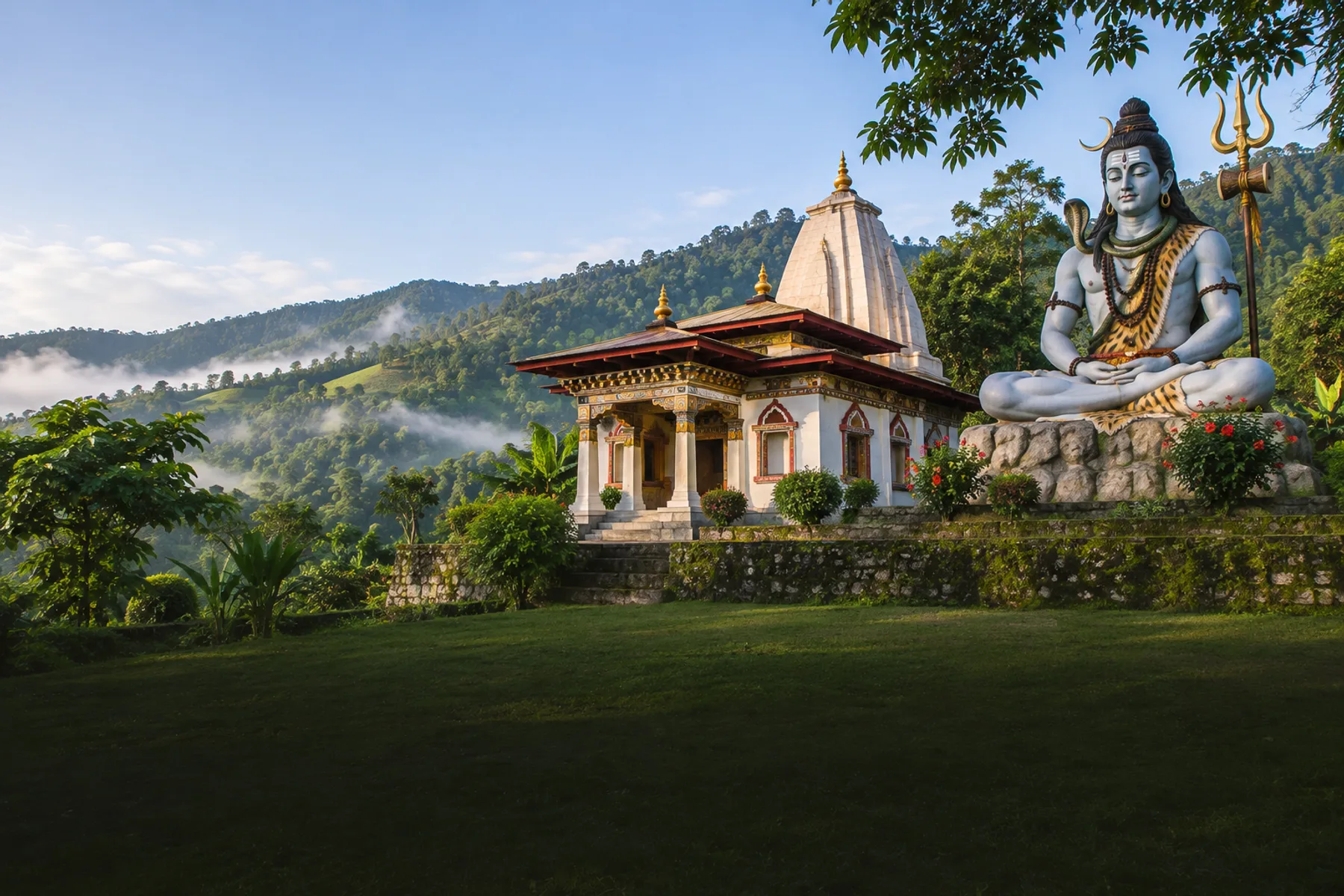
- Shivalaya Mandir
- A temple in Samtse district with a Lord Shiva statue brought from Rajasthan, rebuilt as a gift to the people of Samtse.
- Samtse Dzong and Rabdey
- The district's sights include Samtse Dzong, Samtse Rabdey and Sidhok Khorlo Chorten.
- Dorokha and the Lhop
- Roads link Dorokha with Samtse town, Phuntsholing and Haa via Tergola. Sengdhyen is a Doya (Lhop) community reached by road.
Things to do
Sorted by how long each takes.
An hour or less
- Shivalaya MandirThe temple and its Shiva statue.In Samtse district
- Samtse DzongThe district dzong.In Samtse district
A full day
- Sengdhyen, DorokhaA Doya (Lhop) community in Dorokha reached by road.In Dorokha gewog
Weather and when to go
- Average temperature, °C
- Rainfall, mm
Samtse long-term average near Samtse
Climate: TerraClimate 1991–2020 monthly climatology (Abatzoglou et al. 2018, Scientific Data 5:170191), public domain (CC0).
Samtse is in the southern foothills: summers are hot and humid and winters are dry. The monsoon runs from June to September, with frequent landslides and flooding that can make overland travel difficult. Spring (March to June) and winter (October to December) are the usual times to visit Bhutan.
Riding in Samtse
Dorokha is linked by road to Samtse town, Phuntsholing and Haa via Tergola. Mountain roads in Bhutan have sharp curves and narrow stretches. Landslides in the monsoon can close roads. Ask locally about current conditions on the Dorokha road.