When to ride in Bhutan: seasons, monsoon landslides, winter passes and festivals
Bhutan has two riding seasons, October to November and March to May, either side of a monsoon that cuts its mountain roads with landslides. This guide sets out the seasons region by region, with long-term weather figures, what the monsoon and the winter passes mean on the road, and the festival dates that fill the valleys.

Bhutan's four seasons
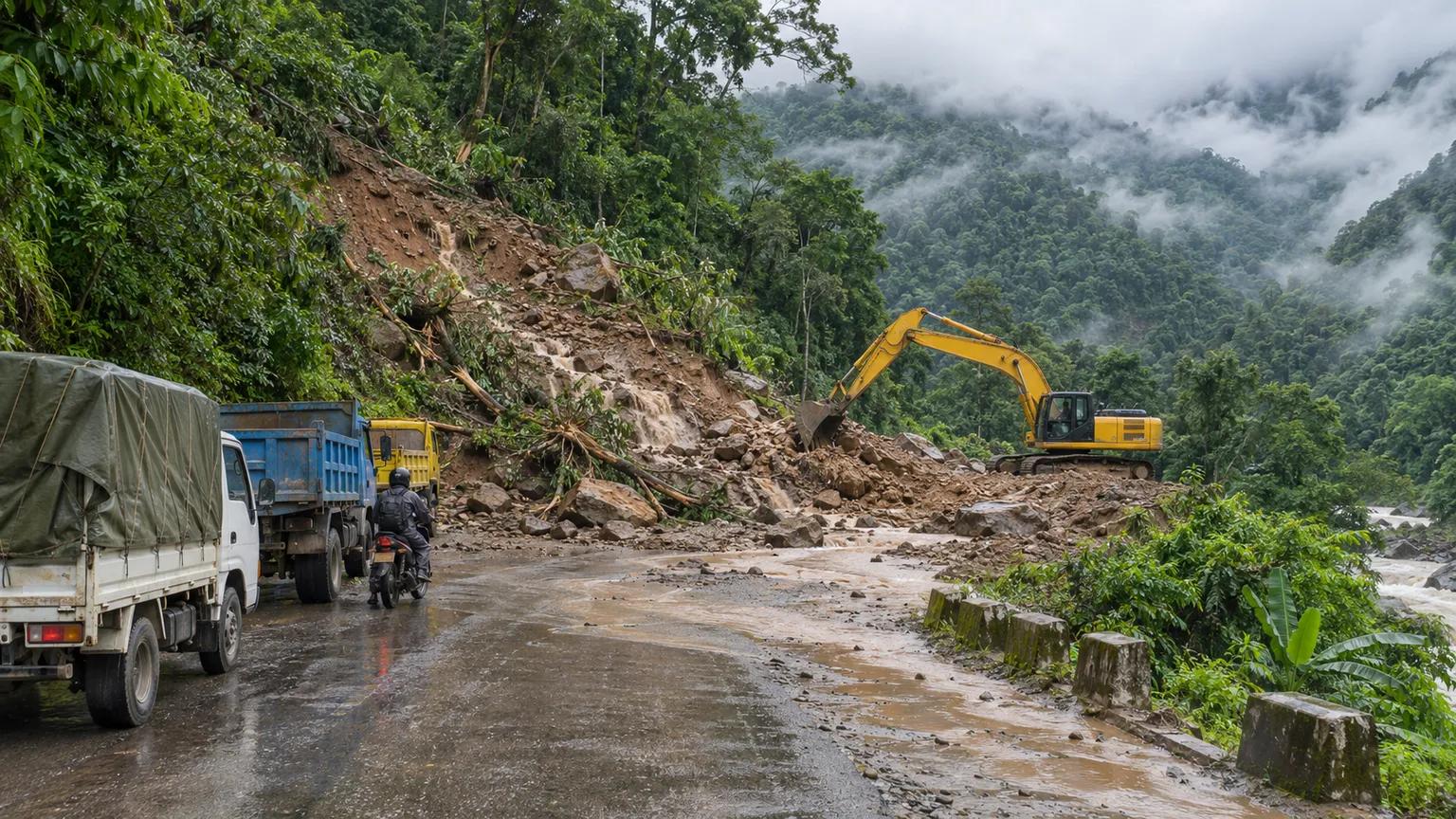
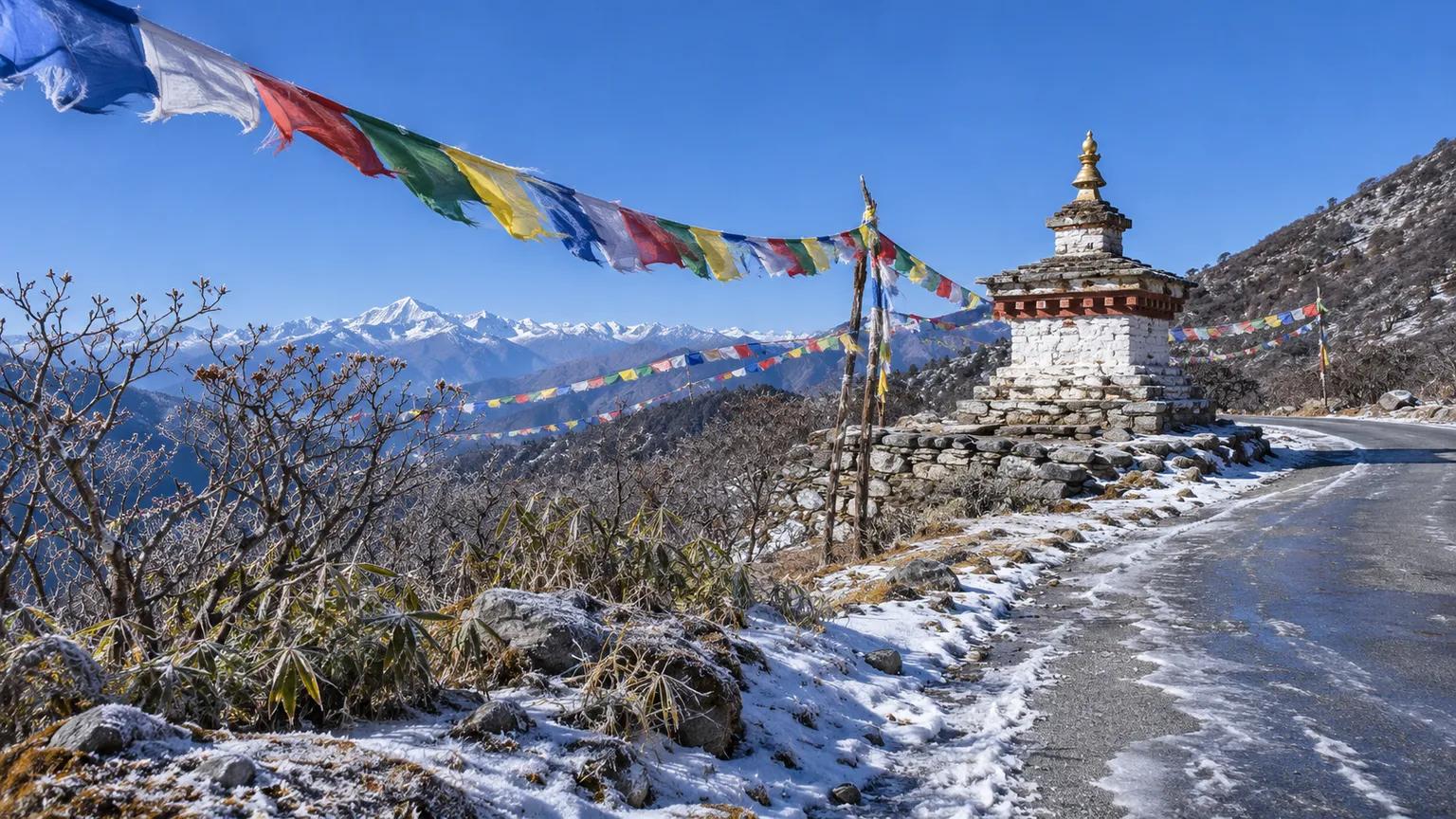
Bhutan's Department of Tourism describes four seasons, shaped by altitude and by the Indian monsoon. Spring is generally dry from early March to mid-April, with nature in full bloom; then summer weather begins with occasional showers that last until late June. The monsoon runs from late June or July to late September and falls hardest on the south. Autumn, from late September or early October to late November, brings bright, sunny days and some early snow high up; it is also the season of festivals. From late November to March winter is crisp, clear and sunny, with frost across much of the country and snow common above 3,000 metres, and the winter monsoon brings gale-force winds over the highest passes. The south stays between about 15 and 30 °C all year.
Riding months, temperature and rainfall by region. Shading follows the official seasons and travel notes; the figures are long-term averages (1996–2018) at one weather station per region.
- Riding season
- Rideable
- Possible: cold or wet
- Monsoon: landslides
- Average temperature, °C
- Rainfall, mm
Paro, Thimphu and Haa measured at Paro
Punakha and Wangdue measured at Wangdi Phodrang
Central: Pele La to Bumthang measured at Bumthang
East: Mongar and Trashigang measured at Mongar
Southern foothills measured at Samtse
Each panel uses one station of Bhutan's National Center for Hydrology and Meteorology, as published by the World Meteorological Organization; the temperature is the midpoint of the mean daily high and low. Paro stands for the western valleys of Paro, Thimphu and Haa; Wangdi Phodrang for the warmer, lower valleys of Punakha and Wangdue; Bumthang for central Bhutan; Mongar for the east; and Samtse for the southern foothills, where the road from Phuentsholing begins. The valley towns are much warmer than the passes the roads cross between them: Dochu La at 3,100 metres, Pele La at 3,420 metres, Thrumshing La at about 3,750 metres and Chele La at 3,988 metres. Note the scale of the south's rain: Samtse averages about 1,200 mm in July, ten times what falls in Paro.
Source: World Meteorological Organization, World Weather Information Service: Paro climate normals, 1996–2018 (midpoint of mean daily high and low); World Meteorological Organization, World Weather Information Service: Wangdi Phodrang climate normals, 1996–2018 (midpoint of mean daily high and low); World Meteorological Organization, World Weather Information Service: Bumthang climate normals, 1996–2018 (midpoint of mean daily high and low); World Meteorological Organization, World Weather Information Service: Mongar climate normals, 1996–2018 (midpoint of mean daily high and low); World Meteorological Organization, World Weather Information Service: Samtse climate normals, 1996–2018 (midpoint of mean daily high and low); Wikipedia: Dochula Pass (3,100 m; Himalayan views October to February); Wikipedia: Pele La (3,420 m); Wikivoyage: Bhutan (rock falls in summer, Thrumshing La at 3,750 m; revised 8 November 2026); Wikipedia: Chele La (3,988 m between Paro and Haa; narrow and steep, snow and ice in winter)
The monsoon and the landslides
Winter on the passes
Festivals
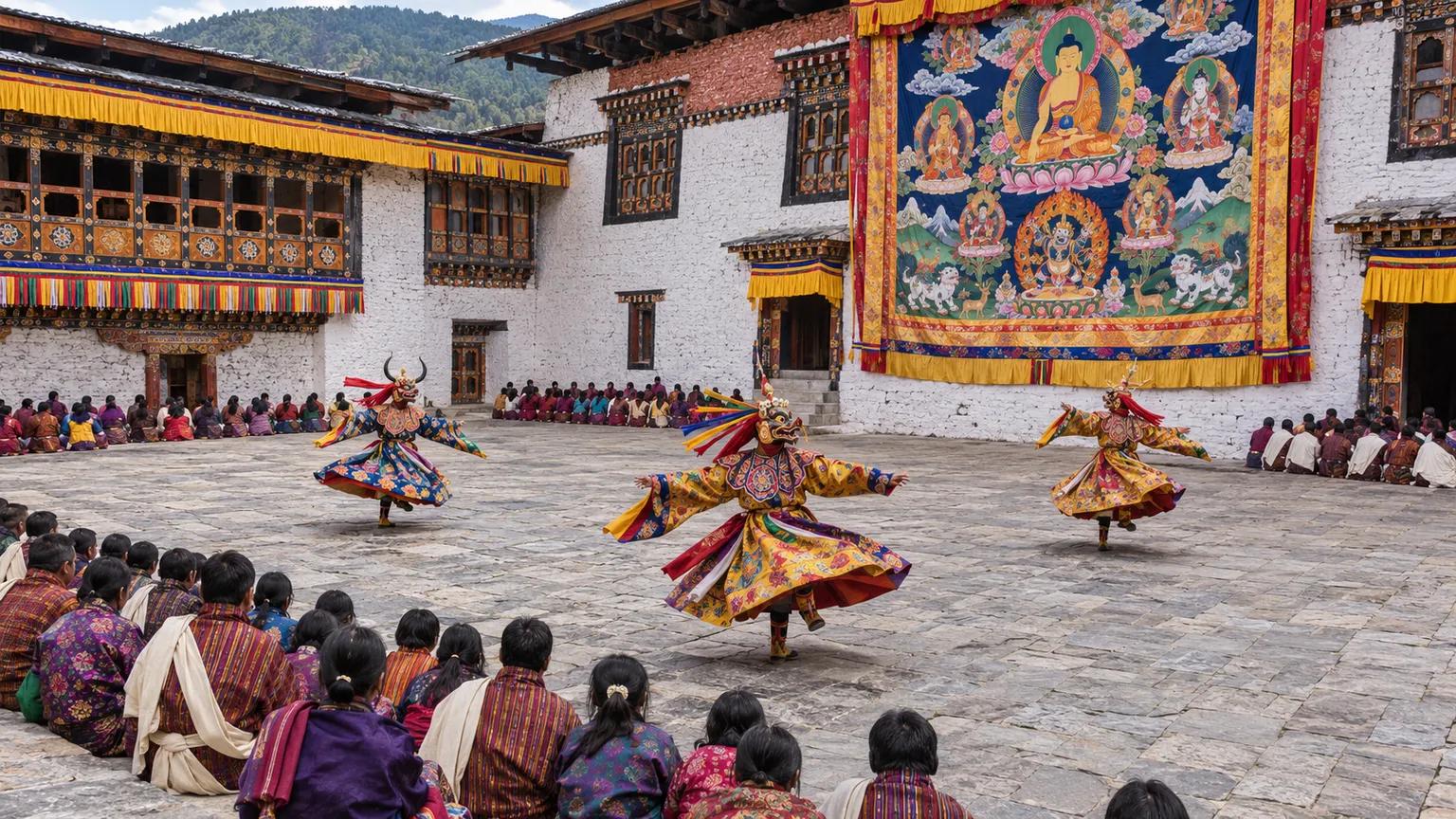
Bhutan's festivals, most of them tshechus of masked dances in the courtyard of a dzong, follow the lunar calendar, so their dates move every year. The Department of Tourism's festivals page links tentative date lists for 2025 and 2026, and a 2027 list, last updated in February 2025, sits on the same file server. It gives Punakha Tshechu on 16 to 18 February and Paro Tshechu on 18 to 22 March; Wangdue Tshechu on 8 to 10 October and Thimphu Tshechu on 10 to 12 October; Jakar Tshechu in Bumthang on 6 to 9 November and the Black-Necked Crane Festival at Gangtey, in the Phobjikha valley, on 11 November. Mongar and Trashigang hold theirs on 6 to 8 and 7 to 9 December, and the Druk Wangyel festival is held on Dochu La on 13 December. The list gives Haa Tshechu as 6 to 8 November, but places it among the early October festivals (in 2026 it was held on 19 to 21 October), so check that one before you plan around it. The cranes themselves arrive at Phobjikha in the last week of October.
Source: Department of Tourism, Bhutan: Festivals (links the tentative festival date lists for 2025 and 2026); Tentative festival dates for the year 2027 (updated 14 February 2025; on the Department of Tourism's file server, not yet linked from its festivals page); Wikipedia: Phobjikha Valley (black-necked cranes arrive in the last week of October)
What each season means on the road
On Dochu La the Himalayan view is clearest from October to February. Chele La, the highest road pass on the usual routes at 3,988 metres, is the one that can carry snow and ice through the winter. Pele La, at 3,420 metres, separates the west from central Bhutan, and the side road down to Phobjikha is at its most visited when the cranes are in, from late October. The southern foothills turn the other way round: their riding months are the cool, dry ones from November to March, when the hills above are cold.
Source: Wikipedia: Dochula Pass (3,100 m; Himalayan views October to February); Wikipedia: Chele La (3,988 m between Paro and Haa; narrow and steep, snow and ice in winter); Wikipedia: Pele La (3,420 m); Wikipedia: Phobjikha Valley (black-necked cranes arrive in the last week of October); Department of Tourism, Bhutan: FAQs (seasons, Indian monsoon from late June or July to late September, snow above 3,000 m, safety and monsoon disruption)