Timiș County
The largest county by area, in the Banat in the far west, mostly plain with hills and the Poiana Ruscă Mountains in the east. Beyond Timișoara it offers the music town of Lugoj, the spa of Buziaș, Swabian villages and the point where Romania, Hungary and Serbia meet.
- County seat
- Timișoara
- Area
- 8,696.7 km²
- Relief
- Plain 77.2%, hills 19%, mountains 3.5%
- Borders
- Serbia (south-west), Hungary (north-west)
- Time zone
- UTC+2, UTC+3 in summer
What Timiș is known for
- Lugoj, the city of music
- A city on the Timiș river. The Ion Vidu Municipal Choir has existed since 1810 and the city has the oldest piano school in Banat, founded in 1760.
- Buziaș spa
- A spa town declared a spa resort of national interest in 1911, with an imperial colonnade, a town park with many ornamental species and mineral springs first analysed in 1811. Water was bottled here from 1840 to 2014.
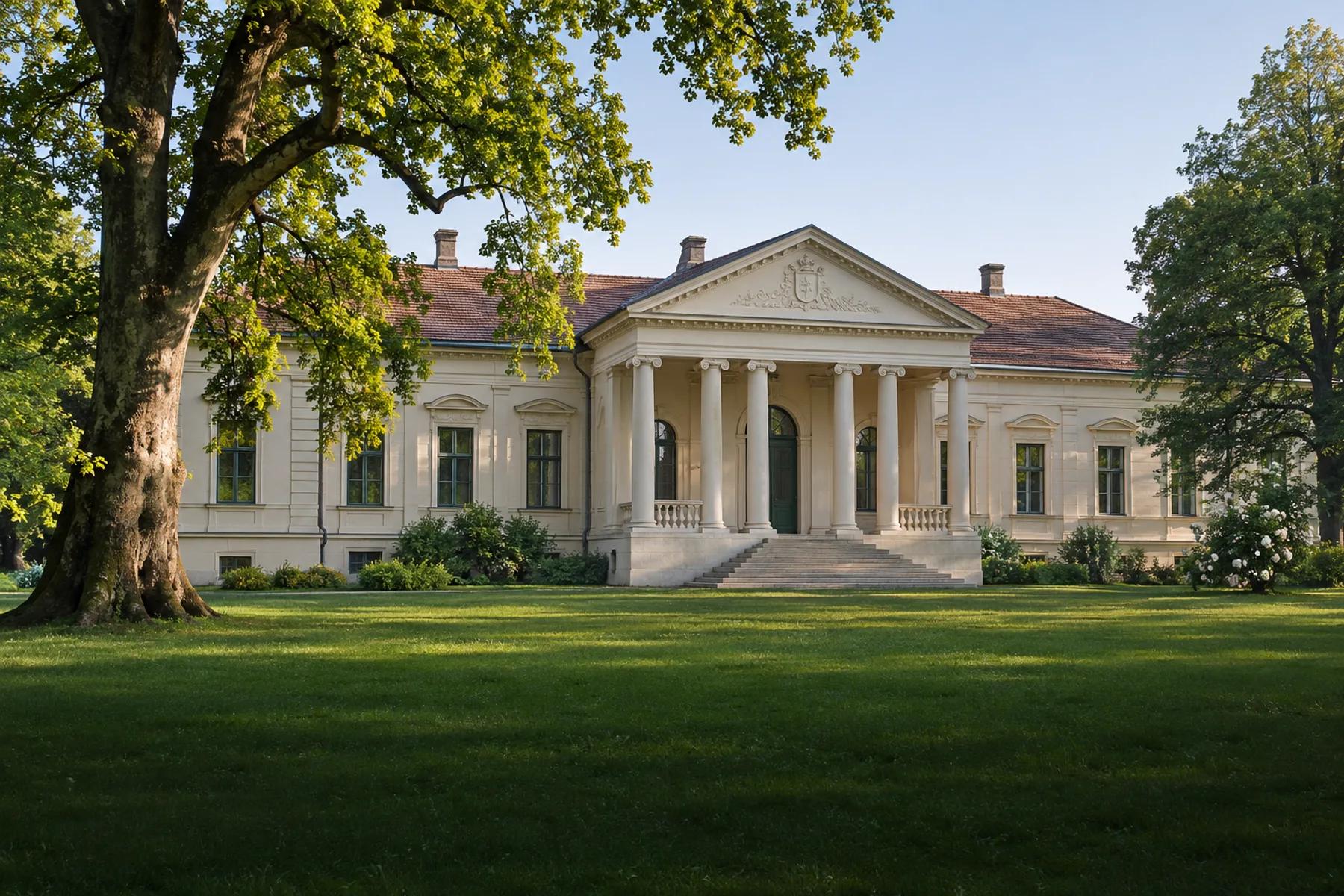
- Nákó Castle, Sânnicolau Mare
- A neoclassical castle built around 1850 to 1853, now the Cultural House and Town Museum. The composer Béla Bartók was born in the town, the westernmost in Romania.
- Jimbolia
- Founded in 1766 by German colonists, with the Csekonics Mansion of 1863 to 1870, now the town hall.
- Triplex Confinium at Beba Veche
- The westernmost point of Romania, where the borders of Romania, Hungary and Serbia meet.
- Recaș vineyards
- A town first mentioned in 1318 and best known for the quality of its wines, grown by a large winery and by independent growers.
Things to do
Sorted by how long each takes.
An hour or less
- Lugoj town centreThe Dormition Church, the Traian Grozăvescu Theater, the Bejan Palace, a Baroque Roman Catholic church and a synagogue of 1843.In Lugoj
- Jimbolia museums and mansionThe Csekonics Mansion, the Stefan Jäger Museum for a Banat Swabian painter, a railway museum and the firefighters' museum.In Jimbolia
- Beba Veche tripointThe westernmost point of Romania, called Triplex Confinium, where the borders of Romania, Hungary and Serbia meet.In Beba Veche
- Făget fortress ruinsThe ruins of the fortress, first documented in 1548, in a town on the upper Bega. The county has historic wooden churches in Țara Făgetului. Ask locally about visits.In Făget
Half a day
- Buziaș spa parkThe imperial colonnade, the Bazar villa, a neo-Gothic Roman Catholic church of 1875 and the Orthodox church of Sts Peter and Paul of 1833, set in the spa park.In Buziaș
- Sânnicolau MareNákó Castle, a Serbian Orthodox church of 1787 and a Roman Catholic church of 1824 with the Nákó family crypt. The Treasure of Nagyszentmiklós, 23 gold objects found here in 1799, is now in Vienna and Sofia.In Sânnicolau Mare
- Lake SurducA reservoir on the Gladna stream, the largest lake in western Romania. Ask locally about access.In Timiș County
Weather and when to go
- Average temperature, °C
- Rainfall, mm
Lugoj long-term average near Lugoj
Climate: TerraClimate 1991–2020 monthly climatology (Abatzoglou et al. 2018, Scientific Data 5:170191), public domain (CC0).
Most of the county is low plain, where summers in Romania are generally very warm to hot, while the eastern hills and the Poiana Ruscă Mountains reach 1,374 m. In winter the sky is often cloudy and snowfall is common.
Riding in Timiș
Plains cover about 77% of the county, on the Banat Plain. Hills lie in the east, round Făget. Ask locally about surfaces on the smaller roads.
Riding areas from the Romania map that pass through Timiș:
- Danube gorges (DN57)475 km loop, 2 days
Cities to start from

Tours and bikes
6 bikes for rent in Timișoara. Prices are per day, as each shop publishes them.

Honda CBR 125 2013
Moto TM$52 a day
Honda Hornet 600
Moto TM$52 a day
Piaggio Fly
Moto TM$21 a day
Kawasaki ER 6 N
Moto TM$52 a day
CF Moto NK 800
Moto TM$82 a day
Yamaha XTX 660cm3
Moto TM$52 a daySee all bikes in Timișoara