Bayankhongor Province
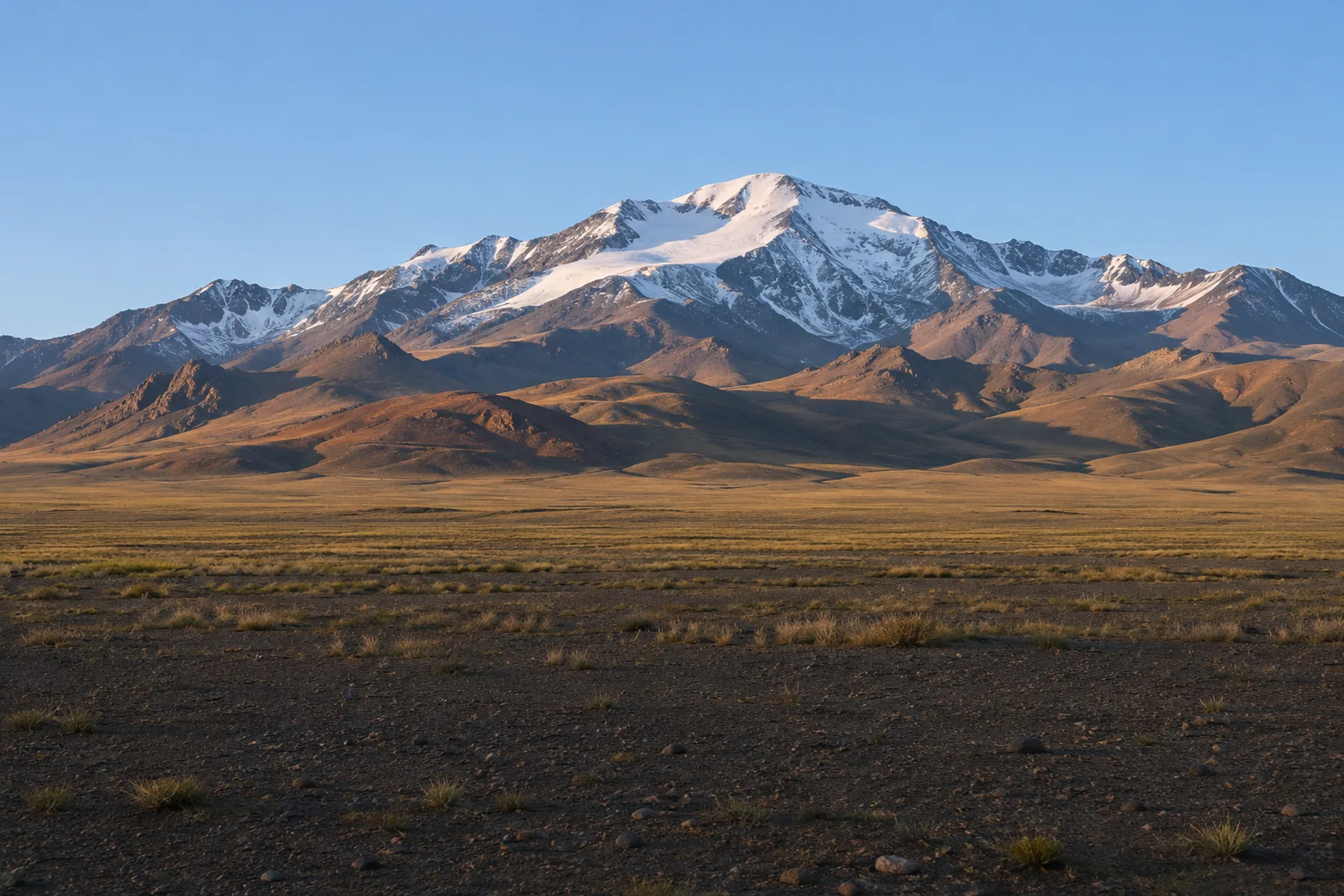
A large province between the Khangai mountains and the Gobi Altai, with semi-desert lakes, a hot-spring resort and a snow-capped Gobi Altai summit. Bayankhongor town is the provincial capital.
- Provincial capital
- Bayankhongor
- Area
- 115,977.80 km²
- Districts
- 20
- Time zone
- UTC+8
What Bayankhongor is known for
- Ikh Bogd
- A mountain in the Gobi Altai range that rises to 3,957 m. Snow can lie on its peaks in midsummer.
- Shargaljuut hot springs
- A hot-spring area north of Bayankhongor town with more than 300 springs.
- Orog Nuur and Böön Tsagaan Nuur
- The two largest lakes in the province, set in the semi-desert between the Khangai and the Gobi Altai. Orog Nuur covers about 140 km².
- Galuut Canyon
- A steep-walled canyon that can be up to 400 m deep.
Things to do
Sorted by how long each takes.
An hour or less
- Museum of Natural HistoryDisplays include a complete Tarbosaurus skeleton, local wildlife and minerals. Ask locally for opening hours.In Bayankhongor town
- History and Ethnographical MuseumTibetan Buddhist relics, nomadic clothing and displays on the Manchu and Soviet periods.In Bayankhongor town
Half a day
- Shargaljuut hot springsA resort with more than 300 hot springs. Ask locally which camps are open.North of Bayankhongor town
Overnight and longer
- Orog NuurA lake in the semi-desert, about 140 km². Ask locally about the tracks.In the central semi-desert
Weather and when to go
- Average temperature, °C
- Rainfall, mm
Bayankhongor long-term average near Bayankhongor
Climate: TerraClimate 1991–2020 monthly climatology (Abatzoglou et al. 2018, Scientific Data 5:170191), public domain (CC0).
Bayankhongor town has long, dry, very cold winters and short, warm summers. Snow can fall on the Ikh Bogd peaks in midsummer, so pack for cold in the mountains even in July.
Ask locally about tracks to the lakes and hot springs after rain or snow.
Riding in Bayankhongor
The town is linked to the rest of the country by the A0303 and A0302 roads. The UK FCDO (7 August 2026) reports fuel shortages in Mongolia. Ask locally about fuel before each leg. Ask locally about current conditions on the tracks to the lakes and hot springs.