West Bengal
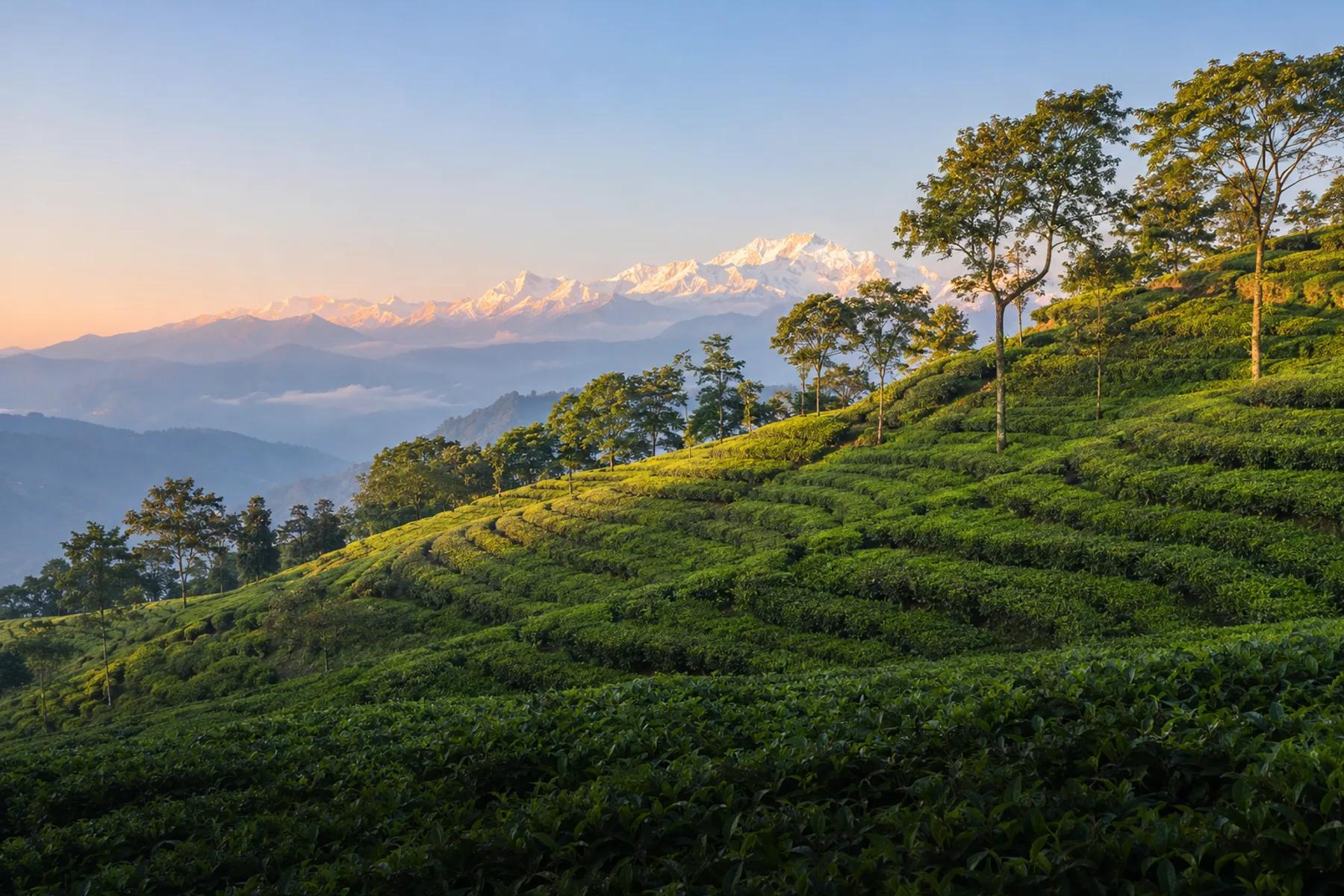
From the mangroves of the Sundarbans on the Bay of Bengal to the tea hills of Darjeeling in the north. Kolkata holds the colonial monuments; Santiniketan and Murshidabad cover the Tagore and Nawab histories.
- Capital
- Kolkata
- Official languages
- Bengali and English; Nepali in Darjeeling district
- UNESCO World Heritage Sites
- Darjeeling railway, Sundarbans National Park, Santiniketan
- Time zone
- UTC+5:30
What West Bengal is known for
- Darjeeling
- A hill city at an average elevation of 2,045 m in the Eastern Himalayas, with Kangchenjunga prominently visible on clear days. It was leased in 1835 as a summer retreat for British officials, and tea growing began there in 1840.
- Darjeeling Himalayan Railway
- A 610 mm gauge line of about 88 km, built between 1879 and 1881, climbing from New Jalpaiguri at about 100 m to Darjeeling at about 2,200 m using six zig zags and three loops. UNESCO listed it on 5 December 1999.
- Sundarbans
- Mangrove forest of tidal channels and mudflats in South 24 Parganas and North 24 Parganas. Almost every corner is reached by boat. Sundarbans National Park is a UNESCO World Heritage Site and tiger reserve.
- Victoria Memorial, Kolkata
- A marble Indo-Saracenic monument built between 1906 and 1921 on the Maidan, in 26 hectares of gardens, now a museum.
- Santiniketan
- A university town in Birbhum district founded by Debendranath Tagore and expanded by Rabindranath Tagore with Visva-Bharati. UNESCO inscribed it on the World Heritage List in 2023.
- Murshidabad
- The capital of the Bengal Subah for seventy years, on the eastern bank of the Bhagirathi. The Hazarduari Palace and Kila Nizamat area is the centre, with the Katra Masjid nearby.
Things to do
Sorted by how long each takes.
Half a day
- Victoria Memorial museumThe museum inside the marble monument, with its entrance on Queen's Way.In Kolkata
- Darjeeling town and tea countryA ridge town where Nepali is the common language, with tea gardens begun in 1840.In Darjeeling district
A full day
- Darjeeling Himalayan Railway rideDaily tourist trains run from Darjeeling to Ghum, India's highest railway station at 2,260 m, and a steam-hauled Red Panda service runs to Kurseong.In Darjeeling district
- SantiniketanThe Visva-Bharati university town founded by the Tagore family, flanked by the Ajay and Kopai rivers.In Birbhum district
- Hazarduari Palace and Katra MasjidNawab-era palaces, mosques and the Motijhil pearl lake in Murshidabad.In Murshidabad district
Overnight and longer
- Sundarbans by boatTidal creeks, mangroves and Bengal tiger habitat, entered through Sundarbans National Park and Sajnakhali Wildlife Sanctuary.In South 24 Parganas district
Weather and when to go
- Average temperature, °C
- Rainfall, mm
Kolkata long-term average near Kolkata
Climate: TerraClimate 1991–2020 monthly climatology (Abatzoglou et al. 2018, Scientific Data 5:170191), public domain (CC0).
The main seasons are summer, the rainy season, a short autumn and winter. Monsoon rains cover the whole state from June to September, and the Darjeeling, Jalpaiguri and Cooch Behar districts get the heaviest. Brief thunderstorms called Kalbaisakhi occur in early summer. The monsoon often brings storms to coastal areas. Winter is mild over the plains.
Riding in West Bengal
Darjeeling and the hill region lie in the northernmost part of the state, joined to the rest by a narrow tract. Monsoon storms form over the Bay of Bengal and hit the coast; ask locally about road conditions in the hills in the rainy season.