Ruse Province
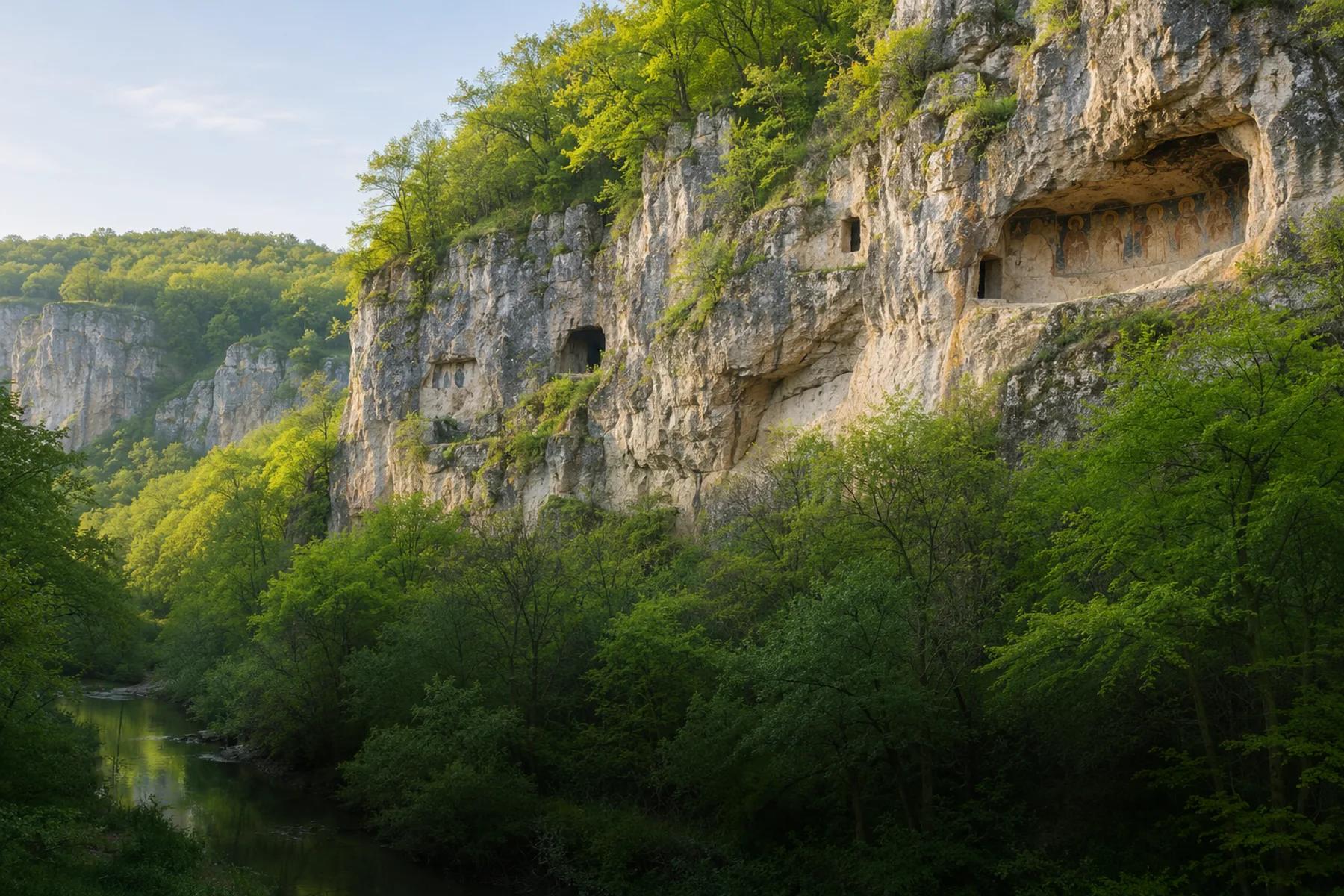
A Danube province in northern Bulgaria: Ruse city and its Neo-Baroque centre opposite Giurgiu, and the Rusenski Lom canyon to the south with the Ivanovo rock-hewn churches, Basarbovo Monastery and the ruins of Cherven.
- Main town
- Ruse
- Area
- 2,803.4 km²
- Municipalities
- 8
- Border
- Romania, across the Danube
- Time zone
- UTC+2, UTC+3 in summer
What Ruse is known for
- Rock-hewn churches of Ivanovo
- Churches, chapels and monasteries cut into the rock of the Rusenski Lom canyon, 32 m above the river, on the UNESCO list since 1979. Monks lived here from the 1220s. 13th and 14th-century frescoes survive in five of the churches.
- Ruse city
- A Danube port on the right bank, opposite Giurgiu, known for Neo-Baroque and Neo-Rococo architecture along Aleksandrovska street. The Pantheon of National Revival Heroes, built on the site of All Saints Church, holds the graves of 39 Bulgarians.
- Cherven
- The ruins of a medieval fortified town in a bend of the Cherni Lom river, a bishop's seat after 1235 and conquered by the Ottomans in 1388. Excavations have uncovered a palace, 13 churches and a three-storey 14th-century tower.
- Basarbovo Monastery
- A cave monastery about 35 m above the Rusenski Lom, an active Orthodox monastery since Father Hrisant resettled it in 1937. St Dimitar Basarbovski, who died in 1685, lived among these cliffs. The patron day is 26 October.
- Rusenski Lom Nature Park
- A 3,408 ha park around the canyon of the Rusenski Lom, established on 26 February 1970. It is known for the rock churches, caves and rafting.
Things to do
Sorted by how long each takes.
An hour or less
- Ruse centre on footAleksandrovska street and the Neo-Baroque and Neo-Rococo buildings around it. The city has 272 monuments of culture.In Ruse town
- Pantheon of National Revival HeroesA national monument and ossuary on the site of the demolished All Saints Church, where 39 Bulgarians are buried, among them Lyuben Karavelov and Angel Kanchev.In Ruse town
- Regional Historical MuseumFounded in 1904 and holding about 140,000 items, including the Borovo Treasure and finds from the Roman fortress Sexaginta Prista.In Ruse town
Half a day
- Basarbovo MonasteryThe cave monastery above the Rusenski Lom, mentioned in an Ottoman tax record in the 15th century. The patron day is 26 October.Near Basarbovo village
A full day
- Ivanovo rock-hewn churchesThe UNESCO-listed churches in the canyon wall, with frescoes of the 13th and 14th centuries and a portrait of Tsar Ivan Alexander. Combine with Cherven.Near Ivanovo village
- Cherven fortified townA national archaeological reserve with the fully preserved 12 m tower, excavated churches and a palace, in a bend of the Cherni Lom.Near Cherven village
Weather and when to go
- Average temperature, °C
- Rainfall, mm
Ruse long-term average near Ruse
Climate: TerraClimate 1991–2020 monthly climatology (Abatzoglou et al. 2018, Scientific Data 5:170191), public domain (CC0).
Ruse is on the Danubian Plain, where winter is under cold air from the east and summer is hot. Lowland snow cover lasts 20 to 30 days. The canyon sites are open-air. Ask locally about ice on the canyon paths in winter and about the roads into the canyon after rain.
Riding in Ruse
Ruse sits at 45 m on the right bank of the Danube. The rock churches, Basarbovo and Cherven lie along the Rusenski Lom and Cherni Lom canyons. Ask locally about the state of the canyon roads and the way back to the main road after rain or snow.